Olympic Soil Solidarity
It Starts with the Soil…
The farms of the Olympic Peninsula import thousands of pounds of soil amendments each year in order to bolster soil fertility and maintain food production at current levels. This system renders growers (and communities!) in our remote location vulnerable to global supply chain disruption, is expensive for farmers, and fraught with significant carbon emissions.
Fortunately, we have many organic industrial waste streams that can serve as “circular economy” inputs for a rich, carbon-sequestering, water-conserving compost that will build and maintain soil fertility, the soil microbiome, and food system resilience in the face of climate change. These include, but may not be limited to: biomass waste from timber and milling operations, forest management, and community development; biochar from the Port Townsend Paper Mill; nuisance algae, (e.g. kelp and ulva,) oyster, and barnacles shells from commercial shellfish operations; and fish offal from salmon hatcheries. If we combine these in carefully calculated ratios in aerated static piles (ASPs), then screen the finished compost for application using common farm equipment like manure spreaders, we believe we can fill an existing market gap, boost regional self-sufficiency, build soil, reduce carbon emissions, and improve climate resilience, all simultaneously. Imagine feeding so many birds with one seed!
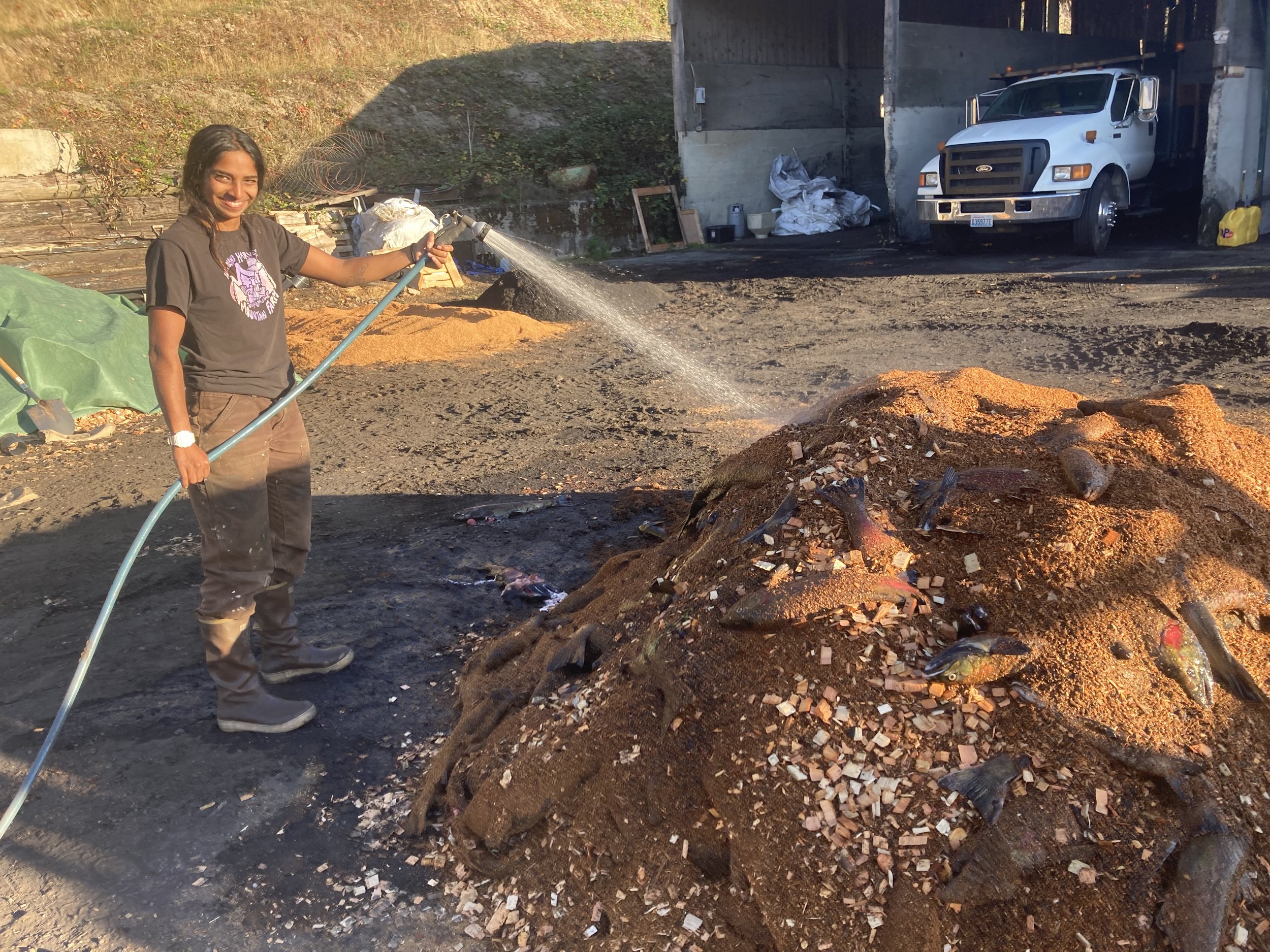
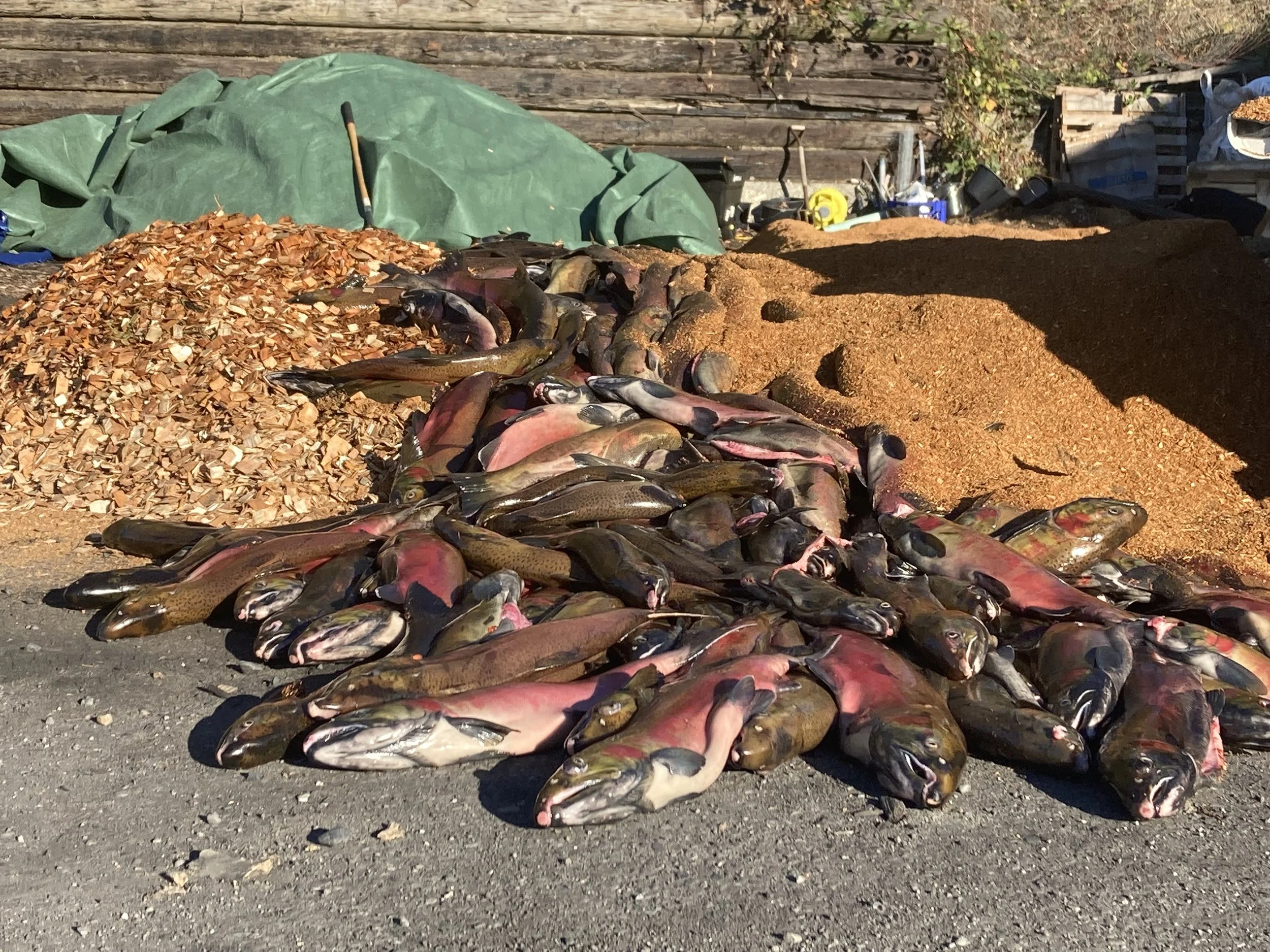
Thanks to initial funding from Tilth Alliance and Sustainable Path Foundation, we launched a pilot project to test these ideas in the spring of 2025, building three piles: one with sugar kelp harvested from a partnership between CRTC and Blue Dot Sea Farms, one with nuisance ulva from Baywater Shellfish and Puget Sound Restoration Fund, and one with coho salmon carcasses from the USFWS Quilcene National Fish Hatchery. Early independent laboratory tests show high quality compost with terrific nutrient profiles. These first piles will finish curing, then be distributed to nonprofit and farm partners.
NORI is currently seeking funding for phase two—as we explore questions of scalability, as well research into other products to support local soil fertility and longterm food production.